
Dr. Emil Kohan | Beverly Hills
Browlift Surgery
Browlift Surgery
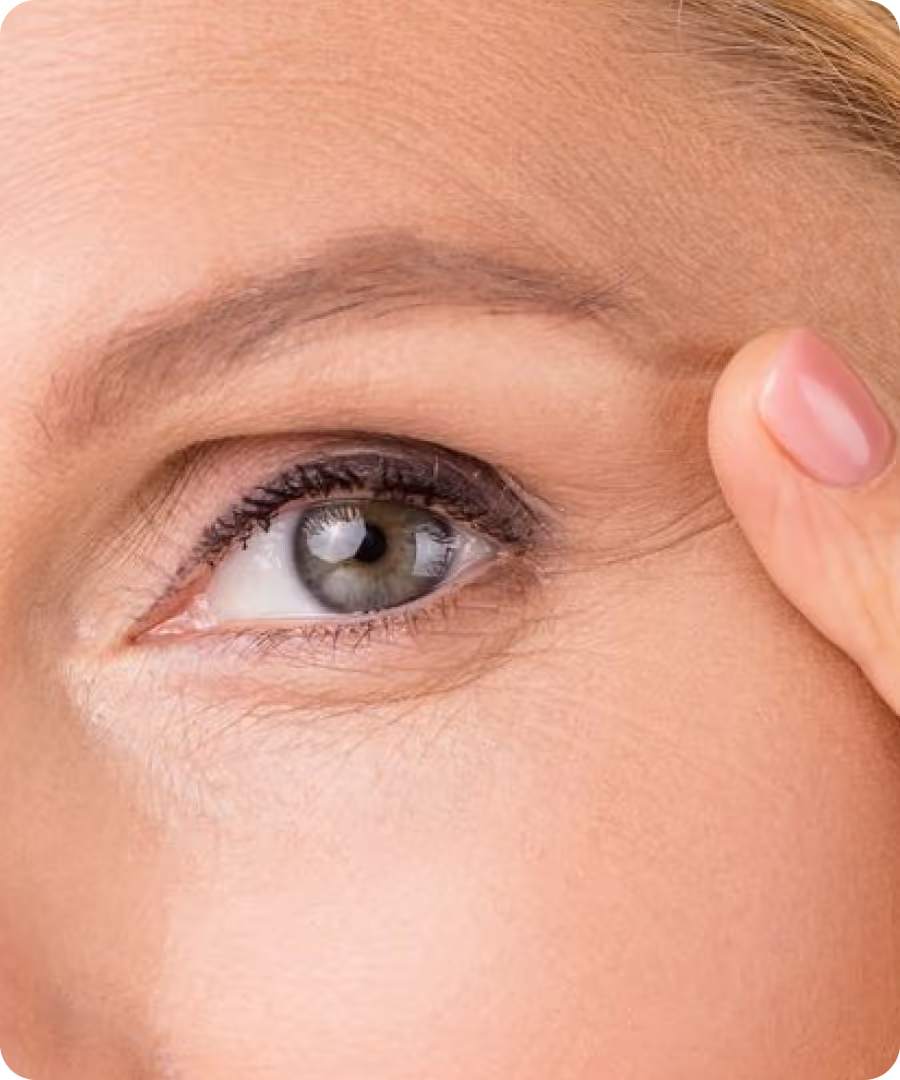
Brow lifts are performed to elevate the eyebrows and position them in a more youthful position. As we age, often times the eyebrows become droopy and hang lower on the face and closer to the upper eyelid. This may create a tired, older, and often “sad” appearance. In addition to changes in the position of the eyebrow - the shape is affected by age as well. There appears to be a heaviness to the lateral aspects of the eyebrows, more so than the medial (or nasal) aspects. This has a negative affect on the youthful eyebrow peak and creates a droopier appearance - necessitating a brow lift procedure. Modest elevation of the eyebrows and improvement in eyebrow shape can be achieved with botox, although this is temporary and must be repeated to maintain the effects. A brow lift procedure may be achieved with different surgical approaches. The decision regarding the surgical approach depends on several factors, including patient desires, anatomy of the patient (forehead length and shape, degree of lift needed, etc). The approaches to perform a brow lift include an endoscopic approach, open approach with a pretrichal incision (anterior hairline incision), or a transpalpebral approach (performed during an upper eyelid blepharoplasty using the same incision). The endoscopic approach uses 5 small (2-5cm incisions) in the hair-bearing area of the scalp and a camera to perform the brow lift procedure. The pretrichal approach is performed using an anterior hairline incision conceals the scar along the hairline. This approach has the benefit of shortening the forehead and achieving a lower hairline as well. Modest elevation and support of the eyebrow can also be performed during an upper eyelid blepharoplasty incision. This is not as effective as the other approaches but may provide some benefit.
Schedule a
Consultation Today
Begin your personalized aesthetic journey with a one-on-one consultation guided by medical expertise.

.avif)
.avif)
Don’t Just Take Our Word
Frequently
Asked Questions
What are the primary aesthetic benefits of a brow lift?
The surgery is designed to address a sagging or heavy forehead that can make a person appear tired, angry, or older than they feel. By elevating the brow line to a more youthful position, the experts at EmilMD can smooth out deep horizontal wrinkles and vertical furrow lines between the eyebrows. This adjustment also opens up the area around the eyes, reducing the appearance of hooding that often occurs with age. Dr. Emil Kohan focuses on achieving a natural look that avoids a perpetually surprised expression.
How is a brow lift different from a traditional facelift?
While both procedures target signs of aging, they focus on entirely different regions of the face to achieve their results. A facelift primarily addresses the lower two-thirds of the face, including the jawline and neck, whereas a brow lift specifically targets the forehead and eyebrow area. Many patients at EmilMD choose to combine these surgeries to achieve a comprehensive facial rejuvenation. Separating these concerns allows for a more precise surgical plan tailored to the patient's unique anatomy. Dr. Emil Kohan evaluates the entire facial structure to determine which combination will yield the most harmonious outcome.
What are the different surgical techniques used for forehead rejuvenation?
Surgeons utilize several methods depending on the patient's hairline, the degree of correction needed, and their specific bone structure. Endoscopic techniques involve smaller incisions hidden within the hair, while a coronal or trichophytic lift might be used for more significant repositioning of the skin. EmilMD's clinical team discusses these options during the consultation to ensure the chosen method aligns with the patient's goals. Each approach is designed to minimize visible scarring while maximizing the lifting effect. Dr. Kohan selects the technique that best preserves the natural hairline and facial proportions.
How long does the recovery process take after a brow lift?
Most individuals can return to their professional and social activities within ten to fourteen days after the procedure. During the first week of healing, patients may experience some swelling and bruising around the forehead and eyes, which gradually subsides. It is important to keep the head elevated during sleep to manage inflammation effectively as recommended by EmilMD. Most strenuous physical activities should be avoided for at least three to four weeks to ensure the internal tissues heal securely. Dr. Emil Kohan provides a detailed recovery timeline to help patients plan their post-operative care.
Will a brow lift affect the appearance of the upper eyelids?
Lifting a heavy or sagging brow often significantly improves the appearance of the upper eyelids by removing the weight of the descending forehead skin. For some patients, this elevation is enough to clear away the hooded look that obscures the eyes. However, if there is a significant amount of excess skin on the lids themselves, Dr. Emil Kohan's expert team may suggest a secondary eyelid surgery for the best result. This dual approach ensures that both the brow and the lids are perfectly positioned for a bright, alert look. EmilMD specializes in coordinating these procedures for a seamless transition between facial zones.
Are the results of a forehead lift considered permanent?
While the surgery cannot stop the natural aging process entirely, the structural changes made to the forehead and brow are very long-lasting. Most patients enjoy the benefits of their rejuvenated appearance for a decade or more before gravity and time begin to show new effects. Maintaining a healthy lifestyle and a consistent skincare routine can help preserve the results achieved at EmilMD. Because the underlying tissues are repositioned and secured, the brow will likely always sit higher than it would have without the intervention. Dr. Kohan utilizes advanced fixation methods to ensure the stability of the new brow position.
Where are the incisions typically located for this surgery?
Placement of the surgical entry points is carefully planned to ensure they are well-hidden within or along the hairline. In an endoscopic brow lift, several tiny incisions are made behind the hair, making them virtually undetectable once healed. If a different technique is required to shorten a high forehead, the incision may be placed right at the hairline to allow for a more discreet transition. The staff at EmilMD is dedicated to meticulous incision management to promote clean and faint scarring. Dr. Emil Kohan prioritizes the aesthetic placement of these marks so patients can wear their hair in any style confidently.
Is anesthesia required for a brow lift procedure?
Most forehead surgeries are performed under general anesthesia or deep intravenous sedation to ensure the patient remains completely comfortable and still. The choice of sedation is determined by the complexity of the surgery and the patient's overall health status. EmilMD maintains a high standard of safety, utilizing experienced professionals to monitor the patient throughout the entire process. A thorough preoperative screening is conducted to confirm that the patient is a healthy candidate for the chosen anesthetic. Dr. Emil Kohan reviews the anesthesia plan during the surgical consultation to address any questions or concerns.