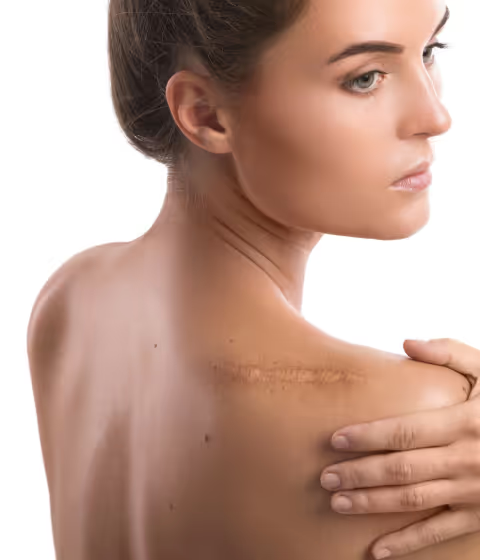
Why is it important for a plastic surgeon to have both reconstructive and aesthetic training?

Plastic surgery is a unified discipline where reconstructive techniques provide the structural foundation for aesthetic excellence. At EmilMD, Dr. Kohan utilizes this dual training to ensure that every procedure prioritizes both functional integrity and natural beauty. This comprehensive background allows a surgeon to manage complex anatomical challenges while achieving the refined, symmetrical results patients desire.
Table of contents
The field of plastic surgery is often split into two perceived categories in the public eye, yet the most successful clinical outcomes rely on a surgeon who treats these paths as one. Reconstructive surgery focuses on restoring form and function to body parts affected by congenital defects, trauma, tumors, or disease. Aesthetic surgery, conversely, aims to enhance or harmonize the appearance of an individual who already possesses normal function. While the goals may differ on paper, the anatomical knowledge and surgical maneuvers required for both are inextricably linked.
A surgeon who has spent years mastering the intricate repair of complex tissue defects brings a unique level of precision to elective cosmetic procedures. This dual expertise means the surgeon is not just looking at the surface level of the skin, but is intimately familiar with the underlying vascularity, musculature, and nerve pathways. At EmilMD, this comprehensive perspective is viewed as a prerequisite for patient safety. When a provider understands how to rebuild a face or a breast from nothing, they possess a superior ability to refine those same areas for purely aesthetic reasons.
The integration of these two subspecialties creates a safety net for the patient that a single-focus training program cannot replicate. Reconstructive training demands a deep understanding of wound healing and tissue transfer, which are critical skills when complications arise in any surgical setting. When a patient chooses a surgeon with this broad background, they are choosing a practitioner who can navigate the unexpected with the steady hand of a trauma expert. This foundation of medical necessity informs every aesthetic choice, ensuring that beauty is never achieved at the expense of health or long term stability.
The Structural Connection Between Reconstruction and Beauty
Understanding the biological limits of human tissue is perhaps the greatest lesson learned during reconstructive residency. Surgeons must learn how much tension a skin flap can handle and how to preserve blood flow to ensuring that relocated tissue survives. These lessons are directly applicable to procedures like a tummy tuck or a facelift, where the longevity of the result depends on the health of the tissue. Without a reconstructive mindset, a surgeon might prioritize a tight appearance over the biological reality of the patient’s anatomy, leading to poor scarring or delayed healing.
The aesthetic eye is equally valuable when performing reconstructive work, as the goal of reconstruction is often to make the patient look as whole and natural as possible. For instance, after a mastectomy, the reconstructive surgeon uses aesthetic principles of symmetry, projection, and contour to rebuild a breast that matches the patient’s natural side. This cross pollination of skills ensures that the surgeon is always thinking about the final visual result, even when the primary mission is functional restoration. Dr. Kohan believes that this holistic approach is what separates a standard medical procedure from a life changing transformation.
Patients often do not realize that the techniques used to hide scars in a cosmetic eyelid surgery are the same techniques used to close a wound after removing a skin cancer. The level of detail required to make a reconstructive repair invisible is the exact same level of detail required to make a cosmetic enhancement look natural. By practicing both, a surgeon remains sharp in the most delicate aspects of microsurgery and tissue handling. This constant refinement of skill benefits every person who walks through the doors of EmilMD seeking a physical change.
- Tissue Management: The ability to handle delicate layers of skin and fat without compromising the blood supply to the area.
- Symmetry Assessment: A trained eye that can identify subtle imbalances in the skeletal or muscular structure before an incision is made.
- Wound Healing Expertise: Deep knowledge of how different skin types and body areas recover from various depths of surgical intervention.
- Anatomical Mapping: An instinctive understanding of where nerves and major vessels are located to minimize the risk of trauma during surgery.
The process of planning a surgery involves a rigorous assessment of the patient's current state compared to the desired outcome. For a reconstructive patient, this might involve looking at old photographs to see how a feature looked before an injury. For an aesthetic patient, it involves a conversation about goals and a physical exam to see what the underlying structure can support. In both cases, the surgeon must create a blueprint that accounts for the movement of muscles and the elasticity of the skin. This phase of the process is where the dual training truly shines through.
Expertise in reconstruction allows the surgeon to see beyond the skin and understand the three dimensional architecture of the body. If a patient wants a rhinoplasty, the surgeon must understand how the internal valves of the nose function to ensure the patient can breathe well after the surgery. A surgeon who only focuses on the outer appearance might inadvertently collapse the airway in pursuit of a specific shape. At EmilMD, the focus is always on maintaining the harmony between how a body part looks and how it performs its daily tasks.
Navigating Complex Revisions and Safety Protocols
Revision surgery is one of the most challenging areas of plastic surgery because the surgeon is often dealing with scar tissue and altered anatomy from a previous operation. This is where reconstructive training becomes an absolute necessity. A surgeon must be able to identify distorted landmarks and work carefully to restore a natural appearance while fixing functional errors. The problem solving skills developed in reconstructive cases are the primary tools used to correct a cosmetic result that did not go as planned elsewhere.
Safety is the cornerstone of the philosophy at EmilMD, and a reconstructive background provides a higher level of risk management. Because reconstructive surgeons often work on patients with complex medical histories or severe trauma, they are trained to anticipate and mitigate systemic risks. This heightened sense of vigilance carries over into the aesthetic suite, where every precaution is taken to ensure a smooth recovery. The ability to manage a wide range of clinical scenarios gives the patient peace of mind that they are in the most capable hands possible.
- Assessment: The surgeon performs a detailed evaluation of the patient’s anatomy and discusses the specific functional or aesthetic concerns.
- Planning: A customized surgical plan is developed that addresses the structural needs of the tissue while aiming for the desired visual outcome.
- Execution: The procedure is performed with a focus on minimal tissue trauma and meticulous suturing to promote the best possible scar quality.
- Monitoring: Post operative care is managed with a reconstructive mindset to ensure that healing progresses without any signs of vascular compromise or infection.
The recovery period is a critical time where the surgeon’s knowledge of biology is put to the test. Patients receive specific instructions on how to care for their incisions and what activities to avoid to prevent putting stress on the surgical site. A surgeon with reconstructive experience can often spot early signs of a healing issue that might be missed by someone with less diverse training. This early intervention can make the difference between a perfect result and one that requires additional corrective work later on.
By integrating the two disciplines, the surgeon is able to offer a more comprehensive range of solutions to the patient. Sometimes a patient comes in for a cosmetic concern that actually has an underlying functional cause that needs to be addressed first. A surgeon who understands both can fix the root of the problem rather than just masking the symptoms on the surface. This lead to results that are not only more beautiful but also more durable over the many years following the operation.
The Evolution of Modern Plastic Surgery Techniques
The history of plastic surgery is rooted in reconstruction, specifically in treating soldiers who returned from war with devastating facial injuries. Over time, the techniques developed to help those individuals were adapted for use in elective cosmetic surgery. This historical context is important because it reminds us that the primary goal of the specialty has always been the restoration of the human form. Modern aesthetic surgery is simply the most refined version of those original reconstructive principles applied to a different set of patient goals.
Innovation in the field often moves from the reconstructive side to the aesthetic side and vice versa. For example, the use of fat grafting was originally developed to fill in hollow areas caused by trauma or birth defects, but it is now a staple of facial rejuvenation and body contouring. A surgeon who stays active in both worlds is at the forefront of these technological and procedural shifts. This allows the team at EmilMD to offer the most advanced options available to their patients, ensuring that every technique used is backed by a broad base of clinical evidence.
- Advanced Microsurgery: Using specialized microscopes to repair tiny vessels and nerves which is essential for complex tissue transfers.
- Structural Rhinoplasty: Utilizing cartilage grafts to support the nose during a cosmetic reshape so that breathing is never compromised.
- Composite Facelifts: Moving deeper layers of tissue rather than just pulling the skin which relies on an intimate knowledge of facial nerve branches.
- Breast Reconstruction: Using the patient's own tissue or high quality implants to recreate a natural silhouette following medical surgery.
The relationship between a patient and their plastic surgeon is built on a foundation of trust and transparency. When a surgeon can explain the "why" behind a certain surgical choice using anatomical facts, it builds confidence in the patient. This educational aspect of the consultation is a priority at EmilMD, where patients are encouraged to ask questions about the mechanics of their procedure. Knowing that a surgeon has the skills to rebuild a limb or a face gives a cosmetic patient a sense of security that their smaller, elective procedure will be handled with the same level of gravity.
As the industry continues to grow, the distinction between a "cosmetic surgeon" and a board certified "plastic surgeon" becomes even more vital for patients to understand. A plastic surgeon has completed years of rigorous training in both reconstruction and aesthetics, whereas other titles may not reflect that same depth of education. Choosing a provider with the full spectrum of training is the best way to ensure that the surgical experience is as safe and successful as possible. This commitment to excellence is what defines the standard of care in a modern surgical practice.
Why Dual Expertise Defines the Standard of Excellence
The decision to undergo plastic surgery is a significant one that involves both physical and emotional considerations. When a patient chooses a surgeon with both reconstructive and aesthetic training, they are essentially getting a two for one expert who understands the body from the inside out. This dual perspective allows for a level of customization that is simply not possible with a one size fits all approach to surgery. The surgeon can adapt their techniques to the unique quirks of each patient’s anatomy, leading to a result that looks like it belongs to them rather than looking operated on.
The aesthetic outcome of any surgery is the visible evidence of a job well done, but the functional outcome is what determines the patient's quality of life. A beautiful nose is of little value if the patient can no longer breathe through it, and a flat stomach is not a success if the underlying muscles are not properly repaired. The dual focus ensures that these two goals are never in conflict with one another. At EmilMD, every surgical plan is a balance of these two pillars, ensuring that the patient leaves the office feeling better and looking their best.
The long term health of the patient is always the ultimate priority in any medical setting. By maintaining a practice that values reconstructive foundations, Dr. Kohan ensures that the team is always prepared for the most complex cases. This culture of clinical excellence trickles down into every minor procedure and non surgical treatment offered at the practice. When the standard is set at the level of complex reconstruction, every other aspect of the patient experience is elevated to meet that same high bar of precision and care.
Frequently
Asked Questions
What is the difference between a cosmetic surgeon and a plastic surgeon?
A plastic surgeon has completed an accredited residency that includes extensive training in both reconstructive and aesthetic procedures. The team at EmilMD emphasizes that this comprehensive background is essential for understanding the full scope of human anatomy and tissue management. In contrast, the term cosmetic surgeon can sometimes be used by doctors from various backgrounds who may not have the same level of specialized reconstructive training. By choosing a board certified plastic surgeon like those at EmilMD, patients ensure their provider has met the highest standards of surgical education and safety.
Can reconstructive surgery also improve a person’s appearance?
Yes, reconstruction is inherently tied to the restoration of a natural and pleasing appearance. When Dr. Emil Kohan performs a reconstructive procedure, the goal is to make the affected area look as normal and symmetrical as possible. While the primary reason for the surgery might be to fix a functional defect, the aesthetic principles used are the same as those in cosmetic surgery. This means that patients at EmilMD receive the benefit of an aesthetic eye even when the procedure is medically necessary.
Why does reconstructive training make a surgeon safer for cosmetic procedures?
Reconstructive training involves working on complex cases where the anatomy may be distorted by trauma or disease. This experience teaches the experts at EmilMD how to handle tissue with extreme care and how to manage the blood supply to ensure proper healing. If a complication occurs during a routine cosmetic surgery, a surgeon with reconstructive training has the specific skills needed to fix it immediately. This level of preparedness is a hallmark of the care provided by Dr. Emil Kohan’s expert team.
Do all plastic surgeons continue to perform reconstructive work throughout their careers?
While some surgeons choose to focus exclusively on aesthetics later in their careers, many maintain a dual practice to keep their skills sharp. Dr. Emil Kohan believes that staying active in reconstructive surgery informs and improves his aesthetic work. This constant engagement with complex anatomical problems ensures that the clinical team at EmilMD remains at the cutting edge of surgical technique. It also allows the practice to serve a wider variety of patient needs with a high level of expertise.
How does reconstructive knowledge help with breast augmentation or lifts?
In breast surgery, the surgeon must account for the weight of the tissue and the integrity of the skin to prevent sagging over time. Reconstructive surgeons are experts at using internal sutures and tissue support techniques that were originally developed for breast cancer patients. When these methods are applied to aesthetic cases at EmilMD, the results are often more stable and long lasting. This structural approach is a direct result of the reconstructive training that Dr. Emil Kohan brings to every operation.
Does insurance cover surgeries that have both a reconstructive and aesthetic component?
Insurance typically covers the portion of a surgery that is deemed medically necessary to restore function or correct a deformity. However, if a patient chooses to add purely cosmetic enhancements at the same time, those specific costs are usually out of pocket. The administrative staff at EmilMD works closely with patients to help them understand their coverage and provide clear financial information. This transparency ensures that patients can make informed decisions about their care under the guidance of Dr. Emil Kohan.
What should I look for in a surgeon’s training background?
Patients should look for a surgeon who is board certified by the American Board of Plastic Surgery, which guarantees they have completed the required reconstructive and aesthetic training. It is also helpful to see if the surgeon has completed a fellowship in a specific subspecialty. At EmilMD, the focus is on providing a balanced approach that utilizes all aspects of a surgeon’s education. Checking for these credentials gives you confidence that the provider at EmilMD has the depth of knowledge required for a successful outcome.
Bringing Artistry to Plastic Surgery