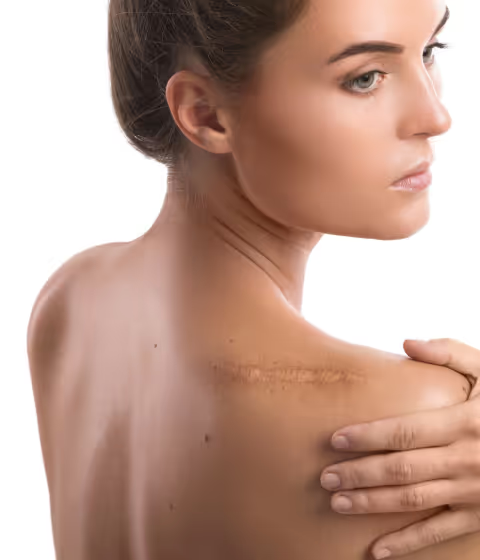
Who is a good candidate for surgical buttock enhancement?

A good candidate for surgical buttock enhancement is an individual in good health who seeks to address volume loss, sagging, or asymmetry in the gluteal region. At EmilMD, candidacy is determined by skin elasticity, available donor fat for grafting, or the structural need for implants to achieve a balanced and proportionate body silhouette.
Table of contents
Surgical buttock enhancement has evolved into one of the most sought after procedures in modern plastic surgery, offering patients the ability to refine their proportions and restore youthful contours. Determining candidacy for this procedure involves a comprehensive evaluation of a person's anatomical structure, skin quality, and overall health status. While many individuals desire a more projected or rounded gluteal profile, the surgical approach must be tailored to the specific physical characteristics of the patient to ensure a safe and aesthetically pleasing outcome.
The concept of a good candidate extends beyond the desire for a larger appearance. It encompasses individuals who have experienced significant changes in their body composition due to massive weight loss, aging, or genetic predispositions that result in a flat or sagging posterior. A successful candidate must possess realistic expectations regarding what surgery can achieve and a commitment to following a strict recovery protocol. This alignment between patient goals and surgical reality is the foundation of a successful transformation.
Anatomical readiness is perhaps the most critical factor in the screening process. The surgeon must assess the relationship between the waist, hips, and thighs to ensure that any enhancement to the buttocks will result in a harmonious silhouette. Furthermore, the presence of adequate donor fat or the integrity of the gluteal muscles plays a major role in determining which surgical technique, such as a Brazilian Butt Lift or the placement of implants, is most appropriate for the individual.
Physical and Medical Prerequisites for Gluteal Surgery
Before considering the aesthetic aspects of the procedure, a candidate must meet certain baseline medical requirements to ensure they can safely undergo anesthesia and the subsequent healing process. Surgeons look for patients who are at a stable weight, as significant fluctuations after surgery can negatively impact the final results. Chronic medical conditions such as diabetes or heart disease must be well managed, and smoking is a strict contraindication due to its detrimental effects on blood circulation and wound healing.
The screening process involves a detailed review of the patient's medical history and a physical examination of the target area. The surgical team must verify that the patient has sufficient skin elasticity to accommodate the new volume without excessive tension. If the skin is too thin or damaged by extensive stretch marks, the surgeon might need to adjust the surgical plan to include skin tightening measures alongside the enhancement.
- The patient must be in good general health with no active infections or untreated medical conditions that could impair healing.
- A stable body mass index is required to ensure that the results of fat grafting or implants remain consistent over time.
- Nonsmokers or individuals willing to quit for several weeks before and after surgery are prioritized to prevent tissue necrosis.
- Candidates should have a clear understanding of the risks associated with general anesthesia and the specific surgical technique chosen.
- Emotional maturity and a positive outlook are essential for managing the stress of the surgical process and the recovery period.
- Physical mobility is necessary as patients must be able to engage in light walking shortly after the procedure to prevent blood clots.
Once these medical hurdles are cleared, the focus shifts to the specific anatomical needs of the patient. Some individuals require a lift to address sagging tissue, while others primarily need volume to correct a flat or recessed appearance. The surgical team works to identify the primary concern and matches it with the most effective intervention. This customized approach ensures that the enhancement looks natural and complements the patient's unique frame.
The recovery phase is another area where candidacy is tested. A good candidate is someone who has the logistical support and the discipline to avoid sitting directly on the buttocks for several weeks. This requirement is non negotiable for fat grafting procedures, as pressure on the newly transferred cells can cause them to die before they establish a blood supply. Patients must be prepared to modify their daily routines significantly during the initial healing window.
Donor Fat Availability and Body Composition
For those interested in a Brazilian Butt Lift, the availability of excess body fat is the primary technical requirement. This procedure involves harvesting fat from areas like the abdomen, flanks, or thighs through liposuction and then processing it for reinjection into the buttocks. Consequently, very lean individuals with minimal body fat may not be suitable candidates for this specific method and might need to consider implants or alternative fillers instead.
The quality of the donor fat also matters significantly. Fat harvested from areas that have previously undergone surgery or trauma may not be as viable for grafting. The surgical team must identify multiple harvest sites to ensure a sufficient volume of healthy fat cells can be collected. This process not only enhances the buttocks but also provides the added benefit of contouring the donor areas for a more dramatic overall transformation.
- Assessment of Harvest Sites: The surgeon identifies areas of stubborn fat that can be removed to improve the waist to hip ratio.
- Fat Processing Protocols: The collected tissue is purified to remove blood and oil, ensuring only the most robust fat cells are used for injection.
- Strategic Reinjection: Fat is placed at varying depths within the subcutaneous tissue to create a smooth and natural looking roundness.
- Volume Calculations: The team determines the precise amount of fat needed to achieve the desired projection without overfilling the area.
This multi step process requires a candidate who is comfortable with undergoing liposuction in addition to the gluteal enhancement. The body must be able to handle the inflammation and fluid shifts associated with multi site surgery. Most successful candidates view the dual nature of the procedure as an advantage, as it allows for a comprehensive reshaping of the midsection and lower body simultaneously.
The longevity of fat grafting results depends heavily on the patient's post operative behavior. Because the transferred fat behaves like living tissue, it will grow or shrink with the patient's weight. A candidate who struggles with weight stability may find that their results fluctuate in an undesirable way. Therefore, a commitment to a consistent lifestyle is a hallmark of an ideal candidate for this particular surgical path.
Skin Quality and the Need for Gluteal Lifting
In cases where the primary issue is sagging or "ptosis" rather than a lack of volume, the candidate may actually require a buttock lift. This is common among patients who have lost a significant amount of weight, leading to redundant skin that hangs downward. Enhancing volume without addressing the skin laxity can sometimes result in an even more heavy or distorted appearance. A good candidate for a lift is someone whose skin has lost the ability to snap back into place.
The distinction between needing volume and needing a lift is a critical part of the consultation. A lift involves removing a strip of skin from the upper gluteal region or the lower back to pull the remaining tissue upward. This corrects the position of the buttocks but does not necessarily add significant projection. Some candidates may benefit from a combination of both skin removal and fat grafting to achieve their ideal shape.
- Evaluating Tissue Descent: The surgeon measures the degree to which the gluteal fold has dropped below its natural anatomical position.
- Assessing Skin Recoil: A pinch test is performed to determine how much the skin can stretch and whether it retains any natural elasticity.
- Determining Incision Placement: For those needing a lift, the surgeon plans incisions that can be hidden within the natural lines of the body or undergarments.
- Addressing Structural Support: The internal tissues are sometimes anchored to the fascia to provide a long lasting elevation of the gluteal mass.
Patients seeking a lift must be comfortable with the trade off of having a surgical scar in exchange for a firmer and more elevated profile. While modern techniques aim to minimize scar visibility, it is a permanent aspect of the procedure. Candidates who prioritize the elimination of hanging skin over the absence of scars are generally very satisfied with the results of a surgical lift.
The surgical team at EmilMD ensures that patients understand the nuances of these different approaches. By carefully examining the thickness of the skin and the underlying fat pad, they can predict how the tissues will respond to various techniques. This level of detail helps to prevent common issues such as bottoming out or the appearance of irregularities on the skin surface.
Realistic Expectations and Psychological Readiness
Beyond the physical attributes, the mental and emotional state of the candidate is paramount. Plastic surgery is an elective process intended to enhance self image, but it is not a cure for deep seated psychological issues. A good candidate possesses an internal motivation for the surgery rather than seeking to satisfy the expectations of others or to mimic an edited image found on social media.
The consultation process includes a discussion about the limitations of surgery. While significant improvements can be made, perfection is never guaranteed. Factors like natural bone structure, muscle shape, and existing asymmetry will always influence the final outcome. A candidate who acknowledges these variables and approaches the surgery with a healthy perspective is far more likely to be pleased with the enhancement.
- Understand that healing is a non linear process that involves temporary swelling, bruising, and changes in sensation.
- Accept that the final results may not be fully visible for several months as the body settles and the swelling resolves.
- Recognize the importance of the surgeon's expertise over seeking the lowest possible price for a complex medical procedure.
- Prepare for the emotional ups and downs that can occur during the first few weeks of recovery.
When a patient is both physically and mentally prepared, the results of buttock enhancement can be profoundly positive. The increase in confidence and the ability to wear clothing with a better fit are frequently cited as major benefits. The expertise of the surgical team lies in identifying these well prepared individuals and guiding them through a safe and effective transformation.
Practical Considerations for a Successful Outcome
Choosing to move forward with surgical buttock enhancement is a partnership between the patient and the clinical provider. The ideal candidate is someone who views the surgery as a starting point for a more confident life and is willing to put in the work required for a smooth recovery. From managing the logistics of the surgical day to adhering to long term maintenance, the patient's involvement is as crucial as the surgeon's skill. The elimination of sagging and the restoration of volume can truly redefine one's silhouette.
The structural improvements provided by these procedures are designed to be long lasting, provided the patient maintains their health. As the body ages, the enhanced contours will still be subject to natural changes, but the foundation created by the surgery remains. This permanence is why the initial selection of the right candidate and the right procedure is so vital. It ensures that the investment of time and resources leads to a result that the patient can enjoy for many years to come.
The goal of surgical buttock enhancement is to create a look that feels authentic to the patient's body. By selecting candidates who meet the rigorous physical and psychological criteria, the team can deliver outcomes that are both safe and beautiful. The transition to a more contoured and proportionate figure is a rewarding experience for those who are truly ready for the change. Expertise and patient dedication combine to produce the most reliable and stunning transformations.
Frequently
Asked Questions
What is the minimum amount of body fat needed for a Brazilian Butt Lift?
There is no single number that applies to every patient, as the required fat depends on the patient's starting size and their aesthetic goals. However, the experts at EmilMD generally look for enough fat to harvest about 1000cc to 1500cc of pure fat for transfer. This usually requires a patient to have a BMI of at least 22 to 25, although this can vary based on fat distribution. If a patient is too lean, Dr. Emil Kohan’s expert team might suggest alternative methods like implants to achieve the desired volume and projection.
How does age affect candidacy for buttock enhancement?
While there is no strict upper age limit, older candidates must have good skin elasticity and be in excellent cardiovascular health. As we age, the skin naturally loses collagen, which can affect how well it drapes over a new implant or fat graft. EmilMD evaluates older patients on a case by case basis to ensure their bodies can handle the recovery process. Younger patients often have better skin recoil, but they must also be at a stable weight before proceeding with a permanent surgical change to their body structure.
Is a buttock lift better than a Brazilian Butt Lift for weight loss patients?
For patients who have lost a massive amount of weight, a lift is often the more appropriate starting point because it addresses redundant, hanging skin. A Brazilian Butt Lift adds volume but does not tighten the skin envelope effectively in cases of severe laxity. Dr. Emil Kohan often recommends a combination approach for these individuals, where the skin is lifted and a smaller amount of fat is grafted to restore lost fullness. The clinical team at EmilMD specializes in determining which combination will provide the most natural and supported result.
Can smokers qualify for buttock enhancement surgery?
Nicotine significantly constricts blood vessels, which is extremely dangerous during a procedure like fat grafting where the transferred cells depend on immediate blood supply. For this reason, EmilMD requires all patients to stop smoking at least four to six weeks before and after the surgery. Failure to do so can lead to fat necrosis, where the transferred fat dies and turns into hard lumps, or severe wound healing complications. Dr. Emil Kohan’s expert team prioritizes patient safety and will postpone surgery if a patient has not successfully quit smoking for the required duration.
What should I expect during the consultation for this procedure?
The consultation is a thorough process where the surgeon examines your anatomy, discusses your goals, and reviews your medical history. You should be prepared to talk about your weight history, previous surgeries, and what specifically you hope to change about your gluteal area. The professionals at EmilMD use this time to educate you on the different surgical options and to take measurements that help in planning the procedure. It is a collaborative session designed to ensure that you are a good candidate and that your expectations align with surgical possibilities.
How long must I wait after pregnancy to be a candidate?
It is generally recommended to wait at least six months to a year after giving birth and finishing breastfeeding before undergoing buttock enhancement. This allows your hormones to stabilize and your weight to reach a consistent baseline. EmilMD’s clinical team advises waiting until you are certain you are finished with childbearing, as future pregnancies can stretch the skin and alter the results of the surgery. Being at your "goal weight" for several months ensures that the contouring performed during the procedure is as precise and long lasting as possible.
Are buttock implants a safe alternative if I don't have enough fat?
Yes, buttock implants are a reliable and safe alternative for patients who lack the donor fat required for a Brazilian Butt Lift. These implants are made of solid silicone, which feels like muscle and cannot leak or rupture like older liquid implants. The specialists at EmilMD are experienced in placing these implants deep within or under the gluteal muscle to ensure they are well supported and look natural. This option is particularly popular for athletic individuals who have very low body fat but want more projection in their posterior.
Bringing Artistry to Plastic Surgery