What are the most successful acne scar treatment options?

The most successful acne scar treatment options include fractional CO2 lasers, RF microneedling, and subcision, which address structural damage beneath the skin surface. Dr. Emil Kohan emphasizes that because every scar profile is unique, EmilMD utilizes combination therapies to achieve up to 90% improvement. By stimulating deep collagen production, these professional interventions provide lasting textural refinement and skin clarity.
Table of contents
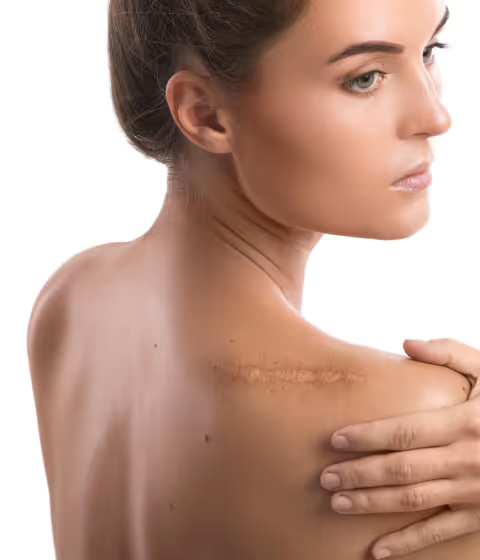
Acne scars are more than just surface-level blemishes; they are the permanent remnants of intense inflammation that has altered the structural integrity of the dermis. When a breakout occurs, the body attempts to heal the site by forming new collagen fibers. However, if the inflammatory response is too disorganized, the resulting repair is often uneven, leading to the characteristic pits, craters, or raised bumps associated with scarring. Understanding that these marks exist within multiple layers of the skin is the first step toward successful treatment.
Traditional skincare and over-the-counter topical products often fail to deliver significant results because they cannot penetrate deeply enough to remodel the damaged collagen matrix. Success in scar revision requires medical-grade technology that can reach the mid-to-deep dermis to trigger a controlled healing response. This is why professional intervention is considered the gold standard for those seeking a visible return to smooth skin texture. Each patient presents a unique "scar map" that requires a specific set of tools for correction.
At EmilMD, the approach to scar revision is rooted in the science of tissue regeneration. Dr. Emil Kohan evaluates the specific morphology of a patient's scars—whether they are sharp icepick scars, wide boxcar indentations, or undulating rolling scars—to determine the most effective sequence of treatments. By utilizing a multi-modal strategy, it is possible to address both the depth of the scars and the surface irregularities simultaneously, providing a comprehensive transformation that single-modality treatments often lack.
The Power of Energy-Based Devices and Resurfacing
Energy-based devices, particularly fractional lasers, represent the most significant advancement in dermatological scar treatment over the last decade. These devices work by delivering precise pillars of thermal energy into the skin, creating microscopic "treatment zones." This process leaves the surrounding tissue intact, which dramatically accelerates the healing process while stimulating the production of fresh, healthy collagen from the inside out.
There are two primary categories of lasers used for this purpose: ablative and non-ablative. Ablative lasers, such as the CO2 laser, are highly effective for deep, severe scarring because they vaporize the outer layers of damaged skin. Non-ablative lasers are gentler and work by heating the underlying tissue without damaging the surface, making them an excellent choice for patients who require minimal downtime. The choice between these technologies depends on the severity of the scarring and the patient's lifestyle constraints.
The evolution of these technologies has made it possible to treat a wider range of skin tones with greater safety than ever before. Modern platforms allow for the fine-tuning of energy levels to avoid complications such as hyperpigmentation. To achieve the best possible results, patients often undergo a series of sessions that build upon one another. The following progression illustrates how a typical high-level laser resurfacing plan might unfold for a patient at EmilMD.
- Consultation and Skin Priming: The skin is prepared with specific medical-grade topicals to stabilize pigment-producing cells and optimize the healing environment.
- Fractional Ablative Treatment: A high-intensity session targets deep indentations, breaking down old scar tissue and inducing a robust inflammatory response.
- Collagen Remodeling Phase: Over the next several weeks, the body replaces the treated zones with new, organized collagen fibers, gradually lifting the floor of the scars.
- Refinement Sessions: Lighter, non-ablative treatments are used to smooth out remaining surface texture and blend the treated areas with the surrounding skin.
- Maintenance and Protection: Long-term results are preserved through strict sun protection and a tailored skincare regimen to prevent new breakouts.
These steps ensure that the skin is not just "burned" but systematically rebuilt. The precision of these devices allows for the treatment of delicate areas, such as the cheeks and temples, where acne scarring is often most prominent. By focusing on the underlying architecture of the skin, Dr. Emil Kohan is able to deliver results that look natural and improve over time as the new collagen matures.
Furthermore, the introduction of hybrid laser systems has allowed for even more customization. These platforms combine different wavelengths in a single pass, addressing both surface pigment and deep textural issues simultaneously. This level of sophistication means that patients spend less time in the clinic while achieving more dramatic improvements in their skin's overall appearance and health.
Regenerative and Mechanical Revision Techniques
While lasers are powerful, they are often most successful when paired with mechanical or regenerative techniques that address specific structural issues. For instance, rolling scars are often "tethered" to the deeper layers of the body by fibrous bands of tissue. No amount of surface laser work can fully lift these scars until those bands are physically released. This is where a procedure called subcision becomes essential for a successful outcome.
Subcision involves using a specialized needle to gently break the fibrous anchors beneath the skin, allowing the depressed scar to float back to the surface. This mechanical release creates a small pocket of space that the body then fills with its own natural collagen. When this is combined with regenerative treatments like Platelet-Rich Plasma (PRP), the results are significantly amplified. PRP uses the patient's own growth factors to accelerate the healing response and improve the quality of the new tissue being formed.
The synergy between different modalities is what defines a modern, successful treatment plan. By layering these techniques, the clinical team can target the scar from above and below. This 360-degree approach is particularly effective for complex cases involving multiple scar types. Let’s highlight the most common mechanical and regenerative tools used during a comprehensive revision at EmilMD.
- RF Microneedling: This device combines traditional microneedling with radiofrequency energy to tighten skin and improve scar depth with minimal surface trauma.
- Dermal Fillers: Temporary or semi-permanent fillers can be used to instantly lift deep boxcar or rolling scars, providing an immediate textural improvement.
- TCA CROSS: A high-concentration chemical acid is applied precisely into the base of icepick scars to trigger localized collagen growth and close the "pore."
- PRP Integration: Using a patient's own platelets during or after a procedure to flood the area with healing proteins and reduce overall recovery time.
These interventions are designed to work with the body's natural biology rather than against it. By providing the skin with the right signals and the necessary building blocks, we can encourage a level of repair that was previously thought impossible. Dr. Emil Kohan carefully selects the combination of these tools based on how the skin responds during the initial phases of the treatment plan.
The use of radiofrequency (RF) microneedling has become especially popular due to its versatility across all skin types. Unlike some lasers, RF energy is "color-blind," meaning it can be used safely on darker skin tones without the risk of darkening the skin. This has opened up successful treatment options for a much broader demographic of patients. At EmilMD, we prioritize safety alongside efficacy to ensure that every patient achieves their aesthetic goals without unnecessary risk.
Optimizing Outcomes Through Combination Therapy
The most successful acne scar treatments are rarely "one-and-done" solutions. Because the skin is a dynamic organ, it often requires different stimuli at different stages of the healing process. Combination therapy allows for a phased approach where the most pressing issues are addressed first, followed by fine-tuning of the skin's tone and luminosity. This logical progression ensures that the final result is a cohesive and natural-looking rejuvenation.
For example, a patient might start with subcision and fillers to address deep volume loss, followed by a series of fractional laser treatments to smooth the surface. Finally, medical-grade chemical peels might be used to address any lingering post-inflammatory hyperpigmentation. This tiered strategy respects the skin's healing capacity and avoids overwhelming the tissue, leading to more predictable and satisfying outcomes.
The expertise of the provider is the most critical variable in the success of these treatments. Knowing when to be aggressive and when to allow the skin to rest is an art form that requires years of clinical experience. The experts at EmilMD take the time to educate every patient on the "why" behind their specific plan, fostering a partnership that leads to better long-term compliance and results. The following simple bullet points summarize the benefits of this combined approach.
- Synergistic Healing: Using multiple tools often leads to better results than the sum of individual treatments.
- Reduced Total Downtime: Phased treatments allow for more aggressive work in targeted areas while keeping the overall recovery manageable.
- Higher Patient Satisfaction: Addressing volume, texture, and color simultaneously leads to a more comprehensive transformation.
- Longer Lasting Results: Stimulating collagen through different biological pathways creates a more resilient and stable skin structure.
By moving away from a "single-device" mindset, we can offer patients a truly customized experience. The goal is not just to fade the scars but to restore the patient's confidence and quality of life. At EmilMD, we understand the emotional toll that acne scarring can take, and we are committed to providing the most advanced and successful options available in modern medicine.
As the field of dermatology continues to advance, new regenerative options like exosomes and specialized biologics are beginning to play a role in scar revision. These treatments promise even faster healing times and more refined results. Dr. Emil Kohan stays at the forefront of these innovations to ensure that our patients always have access to the latest breakthroughs in skin health.
Long-Term Skin Health and Scar Prevention
The final phase of any successful scar treatment plan is the transition to a maintenance and prevention strategy. Once the structural repairs are made, the focus shifts to preserving the new collagen and preventing future inflammatory events that could lead to new scarring. This involves a commitment to a professional skincare routine and periodic "refresh" treatments to keep the skin looking its best as it ages.
A strong emphasis on sun protection is non-negotiable. Ultraviolet radiation breaks down the very collagen that the treatments worked so hard to build. Furthermore, sun exposure can make existing scars more prominent by darkening the surrounding skin. The clinical team at EmilMD provides every patient with a post-treatment protocol that includes high-SPF broad-spectrum protection and antioxidant serums to shield the skin from environmental damage.
Achieving a successful outcome is a collaborative effort between the surgeon and the patient. While the in-office procedures do the heavy lifting, the daily habits of the patient determine the longevity of the results. By viewing scar revision as a journey toward total skin health, patients can enjoy their smoother, clearer complexion for many years to come. This is a meaningful checklist for maintaining your results after your procedure at EmilMD.
- Daily Sunscreen Application: Use a mineral or chemical SPF of at least 30, even on cloudy days, to protect your new collagen.
- Gentle Exfoliation: Use dermatologist-approved acids or retinoids to promote cell turnover without causing irritation.
- Hydration and Nutrition: Supporting the skin from the inside out ensures it has the nutrients needed to maintain its structural integrity.
- Periodic Follow-Ups: Brief in-office assessments allow the team to catch any minor issues before they become significant concerns.
Dr. Emil Kohan believes that everyone deserves to feel comfortable in their own skin. By addressing acne scars with a scientifically backed, compassionate approach, we help our patients turn the page on a difficult chapter of their lives. The strength and resilience of the skin are a reflection of the care it receives, and we are honored to be part of that process for our patients.
The transformation of the skin's surface is often mirrored by a transformation in the patient's self-image. It is not uncommon for patients to report that they no longer feel the need to "hide" behind heavy makeup or specific lighting. This newfound freedom is the ultimate measure of success for any scar treatment plan. We invite you to explore the possibilities of modern scar revision and experience the difference that expert care can make.
Frequently
Asked Questions
Which treatment is considered the single most effective for deep acne scars?
There is no single "best" treatment for every patient, but fractional CO2 laser resurfacing is widely regarded as the gold standard for deep, atrophic scars. At EmilMD, Dr. Emil Kohan often uses this technology because it provides the most significant stimulation of new collagen. However, for deep rolling scars, we frequently combine this with subcision to release the tethered tissue. This multi-layered approach ensures that the "hardware" of the skin is fixed from every possible angle, leading to much higher success rates than laser treatment alone.
How many sessions are typically required to see a 50% to 90% improvement?
While some patients see a visible change after a single session, most successful plans at EmilMD involve a series of three to five treatments spaced several weeks apart. This allows the skin time to heal and produce new collagen between each intervention. The experts at EmilMD customize this timeline based on the severity of your scarring and your skin's unique healing response. Over the course of six to twelve months, as the collagen continues to mature, the final results will emerge, often reaching that high percentage of improvement.
Is it safe to treat acne scars on patients with darker skin tones?
Yes, but it requires a very specific approach and the right technology to avoid post-inflammatory hyperpigmentation. Dr. Emil Kohan utilizes "color-blind" technologies like RF microneedling and specific non-ablative lasers that target the deeper layers of the skin while leaving the pigment-heavy surface intact. At EmilMD, we also use pre-treatment skin priming with specialized creams to lower the risk of discoloration. The clinical team is highly experienced in treating a diverse range of skin types, ensuring that everyone can safely access successful scar revision options.
What is the difference between at-home microneedling and professional treatment?
At-home rollers are significantly less effective and carry a much higher risk of infection and further scarring compared to the medical-grade devices used at EmilMD. Professional microneedling devices reach therapeutic depths that home tools cannot, and they do so with vertical precision that avoids "tearing" the skin. Additionally, the experts at EmilMD can combine professional needling with radiofrequency or PRP, which are not available for home use. The result is a much more robust collagen response and a safer, more predictable outcome for the patient.
Can chemical peels alone successfully remove deep pitted scars?
While superficial chemical peels are excellent for improving skin tone and fading dark spots, they are generally not strong enough to remove deep pitted scars on their own. For these deeper indentations, Dr. Emil Kohan might use a specialized technique like TCA CROSS, where a high-strength acid is applied only to the base of the scar. However, for a total textural transformation, EmilMD’s clinical team usually recommends pairing peels with more intensive modalities like lasers or microneedling to address the full depth of the structural damage.
How long do the results of these professional scar treatments last?
The results of treatments that stimulate your own natural collagen, such as lasers, subcision, and microneedling, are considered permanent. Once the new tissue has filled in the scars, it stays there as part of your natural skin structure. However, it is important to remember that your skin will still continue to age normally. To maintain the smooth texture achieved at EmilMD, Dr. Emil Kohan recommends a high-quality skincare routine and consistent sun protection. While the scars themselves don't "come back," keeping your skin healthy will ensure your results look great for decades.
Is there a specific age that is best for starting acne scar revision?
The best time to start treatment is as soon as the active acne is well-controlled. Waiting too long can actually make some scars more difficult to treat as the tissue becomes less responsive with age. At EmilMD, we treat patients ranging from their late teens to their fifties and beyond. Dr. Emil Kohan emphasizes that the skin's ability to produce collagen is highest in younger patients, but older patients can still achieve dramatic results with the right combination of advanced therapies and regenerative boosters like PRP.
Bringing Artistry to Plastic Surgery