Dr. Emil Kohan | Beverly Hills
Hernia Repair
Hernia Repair
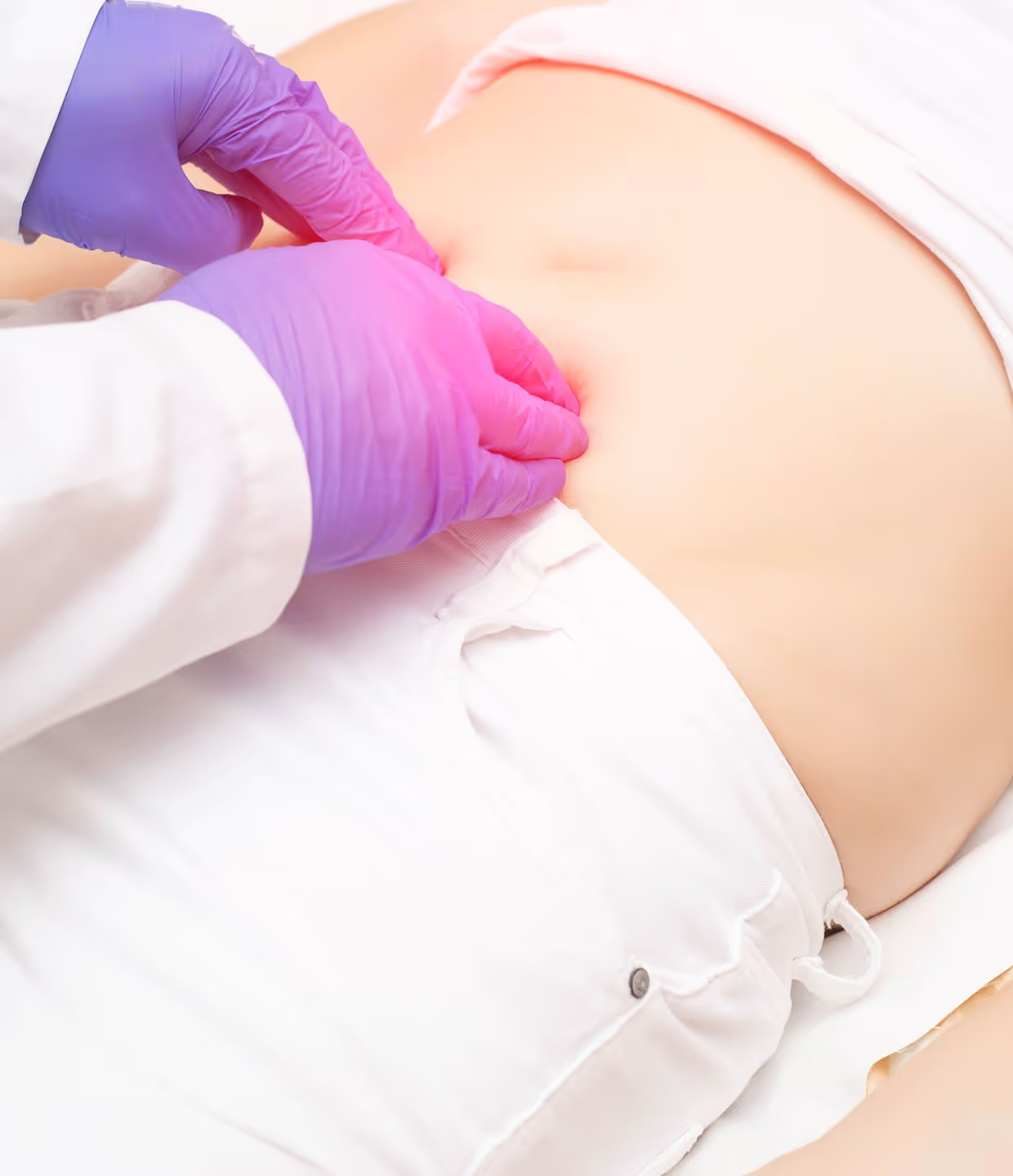
A hernia repair surgery, also known as herniorrhaphy, is a procedure that addresses the protrusion of an organ or tissue through an abnormal opening in the muscles of the abdominal wall. Hernias can occur in different areas of the abdomen, such as the inguinal (groin), umbilical (belly button), and incisional (from a previous surgery) regions. The surgery typically involves the repair of the weakened muscle or tissue, and the insertion of a mesh to reinforce the area, to prevent recurrence of the hernia. The procedure can be performed through open surgery or laparoscopically. Recovery time varies depending on the type of hernia and the surgical approach used, but patients can expect to return to normal activities within several weeks.
Schedule a
Consultation Today
Begin your personalized aesthetic journey with a one-on-one consultation guided by medical expertise.





Don’t Just Take Our Word
Frequently
Asked Questions
What are the primary symptoms that indicate a hernia may require surgery?
A hernia often manifests as a visible bulge or lump in the abdomen or groin area that may become more prominent when coughing, straining, or standing. Many patients at EmilMD report experiencing a dull ache, pressure, or sharp pain at the site of the protrusion during physical activity. While some hernias are initially painless, they generally do not resolve on their own and carry the risk of becoming trapped or strangulated. Seeking a professional evaluation is essential to prevent these serious medical complications. Dr. Emil Kohan assesses the size and type of the hernia to determine the most appropriate surgical intervention.
How does a surgeon reinforce the weakened tissue during a repair?
The surgical process involves pushing the protruding organ or tissue back into its proper place and strengthening the surrounding abdominal wall. In many cases, the experts at EmilMD utilize a specialized medical mesh to provide a tension-free reinforcement over the weakened area. This mesh acts as a scaffold for new tissue growth, significantly reducing the likelihood of the hernia recurring in the future. By using advanced materials and meticulous suturing, the surgical team ensures a durable and stable repair. Dr. Kohan selects the reinforcement method based on the specific location and severity of the defect.
What is the difference between open and laparoscopic hernia surgery?
An open repair involves a single incision near the site of the hernia, allowing the surgeon direct access to the weakened tissue for manual reinforcement. Conversely, a laparoscopic or minimally invasive approach utilizes several tiny incisions and a camera to repair the defect from the inside. Many patients at EmilMD prefer the laparoscopic method because it typically results in less post-operative pain and a faster return to daily activities. However, certain complex or recurrent hernias may still require a traditional open technique for the most secure outcome. Dr. Emil Kohan discusses these options in detail to identify the safest path for each individual.
How long is the typical recovery period following a hernia procedure?
Most patients can return to light, non-strenuous activities within a few days of the operation, though complete healing takes several weeks. It is critical to avoid heavy lifting or intense abdominal straining for approximately four to six weeks as recommended by EmilMD's clinical team. Following these restrictions allows the internal repair and any placed mesh to integrate securely with the body's natural tissues. While minor soreness and swelling are common initially, these symptoms usually subside quickly with proper rest and care. Dr. Emil Kohan provides a customized recovery timeline based on the complexity of the specific repair performed.
Can a hernia repair be combined with a cosmetic tummy tuck?
It is quite common for patients who have both a hernia and excess abdominal skin to undergo a combined procedure known as a herniorrhaphy with abdominoplasty. This integrated approach allows the experts at EmilMD to fix the functional defect while simultaneously contouring the midsection for a flatter appearance. Combining these surgeries means the patient only has to undergo anesthesia and a single recovery period for both medical and aesthetic improvements. This is particularly beneficial for women who have developed umbilical hernias following pregnancy. Dr. Emil Kohan coordinates the surgical plan to ensure both the repair and the cosmetic enhancement are successful.
What are the risks of leaving a hernia untreated over time?
While some small hernias may remain stable for years, they often gradually enlarge and become increasingly painful as the abdominal wall weakens further. The most significant risk is incarceration, where a loop of intestine becomes trapped in the opening and cannot be pushed back in. If the blood supply to that trapped tissue is cut off, it leads to a life-threatening condition called strangulation that requires emergency surgery. The clinical team at EmilMD emphasizes the importance of elective repair to avoid these high-risk emergency scenarios. Dr. Emil Kohan focuses on proactive management to protect the patient's long-term gastrointestinal and abdominal health.
Is anesthesia required for a hernia repair operation?
Most hernia surgeries are performed under general anesthesia to ensure the patient remains completely still and comfortable throughout the delicate repair. In some instances of very small or superficial hernias, local anesthesia with deep sedation may be an alternative option. EmilMD maintains the highest safety standards by utilizing experienced anesthesiology professionals to monitor every procedure. A thorough preoperative health screening is conducted to ensure each patient is a safe candidate for the chosen sedative. Dr. Kohan reviews the anesthesia plan during the surgical consultation to address any specific patient concerns or medical history.