Dr. Emil Kohan | Beverly Hills
FUE Hair Transplant
FUE Hair Transplant
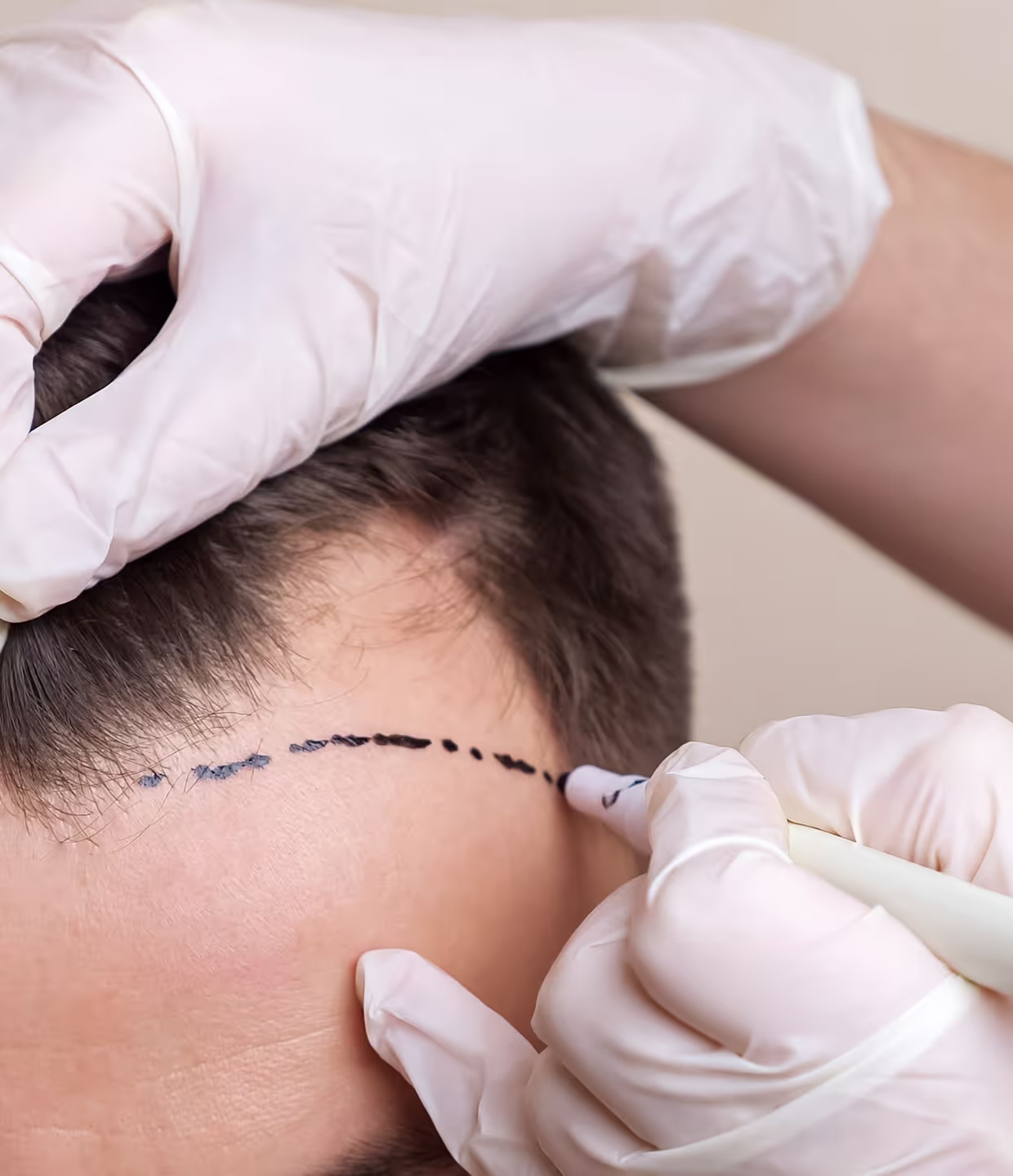
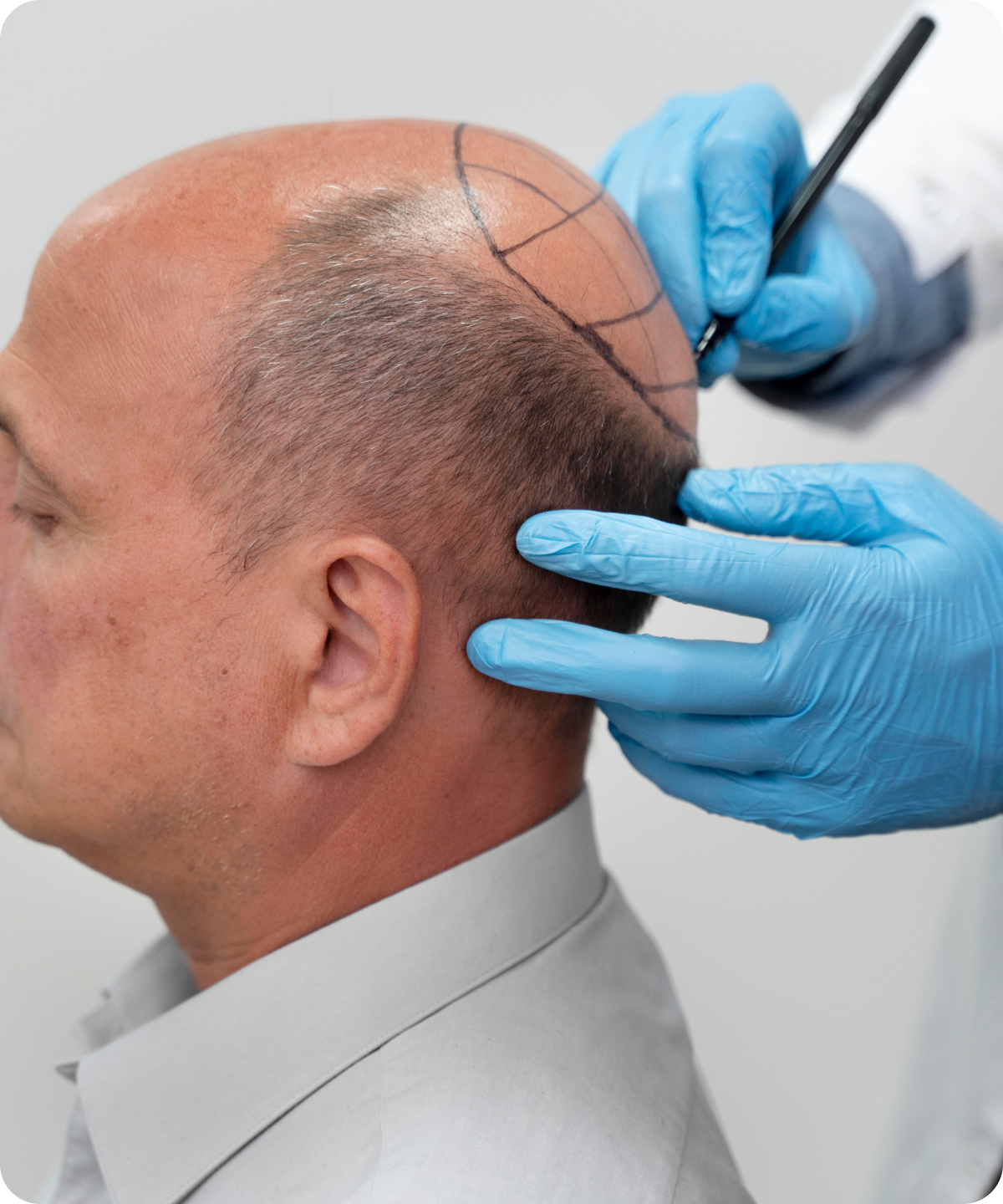
FUE Transplantation is a hair restoration procedure that uses a minimally invasive, automated device to harvest and transplant individual hair follicles from a patient's own scalp. The procedure is designed to restore hair growth in areas of the scalp that have thinned or lost hair due to genetics, aging, or other factors.
The procedure is performed under local anesthesia and typically involves harvesting hair follicles from the back of the scalp (the "donor area") and transplanting them to the areas of the scalp where hair growth is desired (the "recipient area"). The FUE device uses a pneumatic pressure and vacuum to harvest the hair follicles, which allows for minimal trauma to the hair follicles and surrounding tissue, helping to ensure a successful transplant.
The recovery time is minimal, patients can expect to return to normal activities within a few days. The transplanted hair will start to grow in the next 4-6 months and the results are permanent. FUE Hair Transplantation can help to restore a natural-looking head of hair and improve self-confidence.
Schedule a
Consultation Today
Begin your personalized aesthetic journey with a one-on-one consultation guided by medical expertise.


.avif)
Don’t Just Take Our Word
Frequently
Asked Questions
What is the FUE technique and how does it differ from traditional hair transplants?
Follicular Unit Extraction (FUE) is a minimally invasive hair restoration method where individual hair follicles are harvested directly from a donor area—typically the back or sides of the scalp—and transplanted into thinning or balding regions. At EmilMD, this technique is preferred over the older \"strip\" method because it does not require a large linear incision. This results in no visible linear scarring and a much more comfortable recovery process. Dr. Emil Kohan utilizes precise instrumentation to ensure that each graft is extracted and placed with meticulous care to mimic the natural growth pattern of your hair.
Who is considered an ideal candidate for an FUE hair transplant?
Ideal candidates are men and women experiencing pattern baldness, thinning hair, or a receding hairline who still possess sufficient healthy hair in a donor site. During a consultation at EmilMD, the clinical team assesses the density and quality of the donor hair to ensure a successful transfer. It is also important for candidates to have realistic expectations and a stable pattern of hair loss. Dr. Emil Kohan evaluates the scalp's health and the patient's medical history to determine if FUE is the most effective long-term solution for their restoration goals.
What is the typical recovery timeline following the procedure?
Most patients can return to their normal daily routines within a few days, although the scalp may appear slightly red or crusty at the graft sites for about a week. The experts at EmilMD provide detailed post-operative instructions, including how to wash the hair gently and avoid strenuous activity for the first ten to fourteen days. Because FUE involves tiny micro-incisions rather than a large scar, the healing process is significantly faster than traditional methods. Dr. Kohan monitors the progress of the scalp during follow-up appointments to ensure the transplanted follicles are anchoring correctly.
How long does it take to see the final results of the transplant?
The transformation process is gradual, as the transplanted hair typically sheds a few weeks after the procedure—a normal part of the hair growth cycle. New, permanent hair usually begins to emerge within three to four months, with more significant density becoming visible around the six-month mark. At EmilMD, patients generally see the full, final results of their FUE transplant about twelve to eighteen months after the surgery. Dr. Emil Kohan tracks this growth through periodic check-ins to confirm that the hairline is filling in naturally and densely.
Are the results of an FUE hair transplant permanent?
Yes, the hair follicles harvested from the \"permanent\" donor zone at the back of the head are genetically resistant to the hormones that cause balding. Once these follicles are successfully integrated into the recipient area at EmilMD, they will continue to grow naturally for a lifetime. While the transplanted hair is permanent, it is important to remember that non-transplanted hair may still be subject to natural thinning over time. Dr. Emil Kohan often discusses supplementary treatments, such as PRP or medical topicals, to help maintain the health of the surrounding native hair.
Where are the donor sites located and will they look thin after harvesting?
The donor follicles are typically taken from the back and sides of the head where hair growth is most robust and permanent. The experts at EmilMD use a strategic \"scattering\" extraction pattern to ensure that the donor area maintains a natural appearance without looking sparse. Because the micro-punches used in FUE are so small, the resulting tiny white dots are virtually invisible, even with shorter hair styles. Dr. Kohan carefully calculates the number of grafts to be removed to preserve the density of the donor site while maximizing the coverage for the thinning areas.
Is anesthesia required for the hair transplant procedure?
FUE is performed under local anesthesia, which numbs the scalp and ensures the patient remains completely comfortable throughout the session. Because it is a minimally invasive procedure, general anesthesia is not necessary, allowing patients to stay awake, listen to music, or watch movies during the treatment at EmilMD. Most individuals report feeling very little discomfort once the initial numbing is complete. Dr. Emil Kohan and his specialized team prioritize patient comfort and safety, providing a relaxed environment for the duration of the transplant.