How does a surgeon restore a natural look after a mastectomy?

Restoring a natural look after a mastectomy involves sophisticated surgical techniques that rebuild breast volume, shape, and symmetry. At EmilMD, Dr. Emil Kohan focuses on using either cohesive silicone implants or the patient’s own tissue to recreate a soft and realistic breast mound. Achieving a natural result also requires careful attention to skin pocket creation and nipple reconstruction.
Table of contents
Reconstruction following a mastectomy is a deeply personal process that aims to restore not only the physical form but also a sense of wholeness and self-confidence. For many women, the goal is to achieve a breast that looks and feels as close to their original anatomy as possible. Modern plastic surgery has evolved significantly, moving away from simple volume replacement toward a more artistic and anatomical restoration of the breast mound. At EmilMD, the approach is centered on individual proportions and the specific health needs of the patient.
A natural-looking result depends on several factors, including the quality of the remaining chest wall skin, the presence of healthy pectoral muscles, and whether radiation therapy was part of the cancer treatment. Surgeons must carefully evaluate these variables to determine which reconstructive path will yield the most aesthetic outcome. By prioritizing symmetry and softness, the surgical team can create a silhouette that fits naturally within a bra and looks balanced under clothing. Dr. Emil Kohan emphasizes that the reconstruction process is often a multi stage endeavor to ensure the finest details are addressed.
The psychological benefits of a successful reconstruction are often as significant as the physical changes. When a surgeon successfully restores the slope, projection, and softness of the breast, it helps the patient move past the trauma of surgery and back into their daily life with renewed confidence. This restoration is achieved through a combination of technical precision and an understanding of female aesthetics. At EmilMD, the focus remains on providing a compassionate environment where patients feel supported throughout their entire restorative experience.
Evaluating Reconstructive Options for Volume and Shape
The first step in restoring a natural look is deciding between implant-based reconstruction and autologous tissue reconstruction. Implant-based surgery is often less invasive and involves placing a silicone or saline device either under or over the chest muscle. Recent advancements in cohesive silicone gel, often called "gummy bear" implants, allow for a shape that closely mimics the natural slope of a biological breast. These devices are designed to maintain their form while providing a soft and realistic feel to the touch.
Autologous reconstruction, on the other hand, uses the patient's own tissue, typically harvested from the abdomen, back, or thighs, to recreate the breast. This method often produces the most natural results because the transferred tissue ages and fluctuates in weight naturally with the rest of the body. Because it uses living tissue rather than a foreign object, the reconstructed breast often has a more realistic warmth and movement. Dr. Emil Kohan works with patients to weigh the benefits of these longer, more complex microsurgical procedures against the shorter recovery times of implants.
Regardless of the method chosen, the surgeon must also consider the opposite breast to ensure a symmetrical appearance. This might involve a breast lift or reduction on the non-affected side to match the new reconstructed breast. Achieving balance between the two sides is a hallmark of high-quality reconstructive surgery. The clinical team at EmilMD focuses on the overall harmony of the chest wall to ensure that the patient feels comfortable in all types of attire.
- Pre-Surgical Assessment: The team evaluates skin elasticity and chest wall health to choose the best reconstructive method.
- Tissue Expansion: If necessary, a temporary expander is used to gradually stretch the skin to accommodate a permanent implant.
- Permanent Placement: The expander is replaced with a cohesive gel implant or the patient's own tissue is transferred and shaped.
- Symmetry Procedures: The opposite breast may be lifted, reduced, or augmented to match the reconstructed side.
- Refinement Fat Grafting: Small amounts of fat are harvested and injected to smooth out edges and improve the softness of the breast.
- Nipple Reconstruction: The final stage involves creating a new nipple and areola through surgical techniques or medical tattooing.
The refinement process is where the true artistry of the surgeon becomes apparent. Fat grafting has become an indispensable tool at EmilMD for softening the transition between the chest wall and the implant. By injecting the patient's own purified fat cells into thin areas, the surgeon can mask the edges of an implant and create a more supple skin quality. This technique addresses the "hollow" look that can sometimes occur in the upper part of the chest after a mastectomy.
Healing from these procedures takes time, and the breast will undergo several changes in appearance as swelling subsides. Initially, the reconstructed breast may appear high or tight, but it will gradually settle into a more natural position on the chest wall. Regular follow-up appointments allow the surgical team to monitor this progress and plan for any necessary minor adjustments. This commitment to long-term care is what ensures the final result meets the patient's aesthetic expectations.
Refining the Breast Mound with Advanced Techniques
Beyond the initial reconstruction of volume, achieving a natural look requires meticulous attention to the "envelope" of the breast. The way the skin drapes over the new mound determines the overall realism of the result. Surgeons often use acellular dermal matrix (ADM), which is a sterilized tissue graft, to provide internal support and a more defined lower fold. This material acts as a scaffold that allows the patient's own cells to grow into it, creating a more stable and natural-looking breast pocket.
The placement of the implant relative to the pectoral muscle is another critical decision point for the surgeon. Prepectoral reconstruction, where the implant is placed on top of the muscle rather than underneath it, has gained popularity because it preserves muscle function and often results in less post-operative pain. This technique can also lead to a more natural movement of the breast, as it is not restricted by the contractions of the chest muscle. Dr. Emil Kohan evaluates each patient's anatomy to see if this modern approach is suitable for their specific case.
If the patient chooses tissue-based reconstruction, such as a DIEP flap, the surgeon must use microvascular techniques to connect the blood vessels of the transferred tissue to the vessels in the chest. This ensures the tissue remains healthy and vibrant in its new location. Because this tissue comes from the patient's own body, it avoids the risks associated with implants and provides a permanent solution that requires no future replacements. The resulting breast is indistinguishable from a natural one in many aspects of its appearance and feel.
- Anatomic Implants: Teardrop-shaped devices are used to mimic the natural slope and projection of a biological breast.
- Fat Grafting: This technique adds a layer of natural padding to improve the feel and appearance of the skin.
- Internal Bra Techniques: Supportive materials like ADM help maintain the position of the breast over time.
- Acellular Dermal Matrix: This material provides a soft, natural-feeling transition between the implant and the chest wall.
The integration of these techniques allows for a level of customization that was not possible in the past. Every woman has a unique chest wall shape and breast footprint, and the surgeon must respect these boundaries to create a convincing restoration. At EmilMD, the goal is to create a breast that not only looks good in a mirror but also feels like a natural part of the patient's body. This attention to detail is what sets apart a functional reconstruction from an aesthetic one.
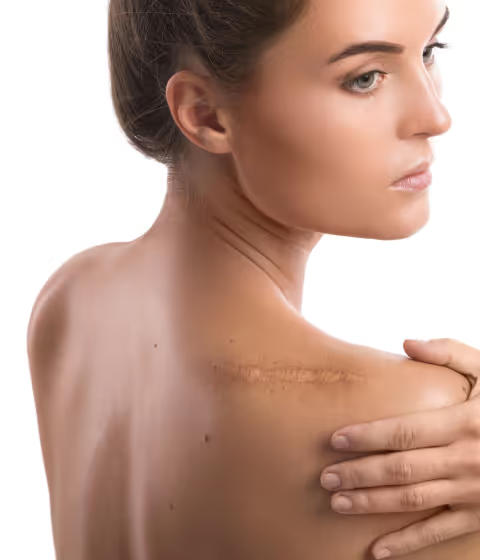
Post-operative care is equally important in maintaining the integrity of the results. Patients are advised on how to care for their skin and manage any scarring to ensure the best possible visual outcome. While some scarring is inevitable, strategic placement of incisions often allows them to be hidden by bras or bikini tops. Over time, these scars soften and fade, further contributing to the natural appearance of the reconstructed breast.
Completing the Restoration with Nipple and Areola Creation
The final touch in restoring a natural breast is the reconstruction of the nipple-areola complex. For many patients, this step represents the emotional conclusion of their surgical journey. While some mastectomies are "nipple-sparing," many require the removal of the original nipple to ensure all cancer cells are addressed. In these cases, the surgeon can use local skin flaps to create a small mound that mimics the projection of a nipple.
Once the surgical site has fully healed, medical tattooing, also known as micropigmentation, is used to create the appearance of a realistic areola. Skilled tattoo artists can use 3D shading techniques to provide the illusion of depth and texture, making the reconstructed nipple look remarkably lifelike. This process is typically performed as an outpatient procedure and does not require a significant recovery period. At EmilMD, the team coordinates with specialized artists to ensure the color and placement are perfect.
The result of this final stage is a breast that possesses all the visual landmarks of a natural one. It allows the patient to look in the mirror and see a complete image rather than a reminder of their surgery. This psychological closure is a vital component of the overall healing process. Dr. Emil Kohan believes that the reconstruction is not truly finished until the patient feels that their breast looks as complete and natural as possible.
- Surgical Nipple Reconstruction: Small folds of skin are repositioned to create a permanent protrusion on the breast mound.
- 3D Medical Tattooing: Advanced pigment techniques are used to replicate the color and texture of a natural areola.
- Color Matching: The tattoo artist ensures the new areola matches the opposite side or the patient's natural skin tones.
- Texture Simulation: Fine details like Montgomery glands can be simulated through careful tattooing techniques.
By offering a full spectrum of reconstructive options, the experts at EmilMD ensure that every woman can find a path that fits her lifestyle and aesthetic goals. Whether through implants, fat grafting, or tissue transfer, the focus remains on quality and realism. The combination of surgical skill and artistic vision allows for a restoration that honors the patient's strength and beauty. The final result is a testament to the resilience of the patient and the advancements in modern medicine.
A reconstructed breast will never be an exact replica of the original, but the results today are closer than they have ever been. Patients can expect a breast that is soft, symmetrical, and appropriately sized for their frame. With the support of a dedicated surgical team, women can navigate the complexities of reconstruction and emerge with a result that helps them feel like themselves again. The focus is on moving forward with a body that feels restored and whole.
The Future of Aesthetic Breast Reconstruction
The field of breast reconstruction continues to advance with new materials and techniques designed to further improve the patient experience. Research into tissue engineering and more sophisticated fat grafting methods promises to make results even more predictable and natural-looking in the coming years. At EmilMD, the team stays at the forefront of these developments to offer patients the most current and effective treatments available. This dedication to innovation is matched only by the commitment to personalized, compassionate care.
Restoring a natural look after a mastectomy is a collaborative effort between the patient and the surgeon. It requires a clear understanding of the patient's priorities and a surgical plan that is executed with the highest level of precision. When these elements come together, the result is a successful restoration that stands the test of time. Dr. Emil Kohan remains dedicated to helping women reclaim their figures and their confidence through these transformative procedures.
Providing a sense of normalcy is the ultimate goal of every reconstruction performed at EmilMD. By focusing on the nuances of shape, texture, and symmetry, the surgical team can provide a result that is both beautiful and functional. Patients are encouraged to ask questions and take an active role in their care, ensuring that the final outcome reflects their personal vision of recovery. The path to restoration is paved with expertise, empathy, and an unwavering focus on the natural aesthetic.
Frequently
Asked Questions
How does a surgeon choose between an implant or using my own tissue for reconstruction?
The decision between implant-based and autologous tissue reconstruction depends on your body type, overall health, and personal preferences. At EmilMD, the experts evaluate the amount of available donor tissue on your abdomen or thighs and consider whether you have had prior radiation, which can affect skin quality. Dr. Emil Kohan discusses the pros and cons of each method with you, noting that while tissue-based reconstruction offers a more natural feel and is permanent, it involves a longer initial surgery and recovery compared to implants.
Will my reconstructed breast have the same sensation as my natural breast?
In most cases, a reconstructed breast will not have the same level of sensation as a natural breast because the nerves are typically severed during the mastectomy. However, some patients at EmilMD experience a gradual return of some sensation over several years, and newer techniques in nerve grafting are being explored to improve this. Dr. Emil Kohan’s clinical team focuses on restoring the look and feel of the breast, and while internal sensation may be different, the aesthetic restoration significantly improves how patients feel in their own skin.
Is fat grafting a standard part of restoring a natural look after a mastectomy?
Fat grafting is frequently utilized by the team at EmilMD to refine the results of both implant and tissue-based reconstructions. This technique involves taking fat from another area of your body and injecting it into the breast area to smooth out contours and provide a more natural, soft texture to the skin. Dr. Emil Kohan often uses fat grafting as a secondary procedure to fill in "hollow" areas near the collarbone or to hide the visible edges of an implant, ensuring a more seamless and lifelike appearance.
How many surgeries are usually required to achieve a natural-looking result?
Restoring a natural look is often a multi-stage process that typically involves two to three separate procedures to achieve the best possible outcome. The first stage focuses on building the breast mound, while subsequent stages, performed at EmilMD, are used for fine-tuning symmetry, fat grafting, and nipple reconstruction. By breaking the process into stages, Dr. Emil Kohan can ensure that each element of the breast is perfectly positioned and that the tissues have time to heal and settle between adjustments.
Can a mastectomy be performed in a way that preserves the nipple?
A nipple-sparing mastectomy is an option for some patients depending on the size and location of the tumor relative to the nipple. If the experts at EmilMD determine that you are a candidate for this approach, the surgeon can preserve the original nipple and areola, which often leads to the most natural-looking final result. Dr. Emil Kohan coordinates closely with the oncological surgeon to prioritize your safety while striving to maintain as much of your natural breast skin and anatomy as possible.
What can I do to ensure my scars fade as much as possible after reconstruction?
Proper wound care and scar management are essential for achieving a discreet and natural look following your surgery. At EmilMD, patients are provided with a comprehensive scar care protocol that may include silicone strips, specialized creams, and massage techniques once the incisions have fully closed. Dr. Emil Kohan emphasizes that while some scarring is permanent, following these steps can help the lines become thin, flat, and light in color over the course of twelve to eighteen months, making them much less noticeable.
Bringing Artistry to Plastic Surgery