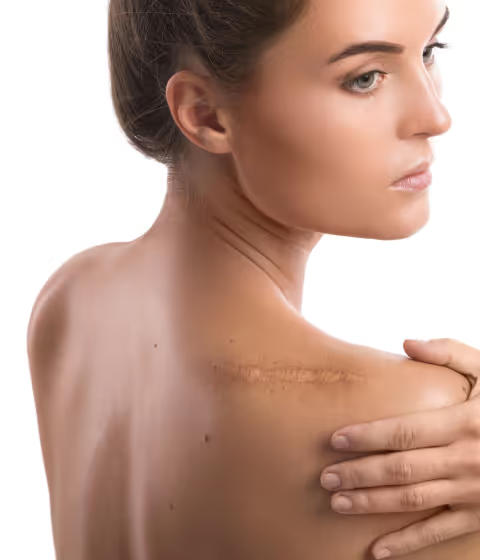
Can a plastic surgeon completely remove a prominent surgical or traumatic scar?

While a plastic surgeon cannot completely remove a scar, EmilMD specializes in advanced revision techniques that make prominent marks nearly invisible. Dr. Emil Kohan utilizes surgical excision, laser therapy, and specialized tension-reduction methods to replace thick or distorted scars with fine, flat lines that blend seamlessly into the surrounding skin.
Table of contents
Scarring is a natural and inevitable part of the body’s healing process following any significant injury or surgical incision. When the deeper layers of the skin, known as the dermis, are breached, the body works rapidly to close the wound and protect itself from infection. This process involves the production of collagen fibers that are structured differently than the surrounding healthy skin. While original skin has a flexible, woven pattern of collagen, scar tissue is characterized by fibers that grow in a single direction, often resulting in a texture and color that stands out from the rest of the body. Many patients seek the expertise of a plastic surgeon because they are dissatisfied with the aesthetic or functional impact of these marks, particularly when they are located on the face or other visible areas.
The question of whether a scar can be completely removed is one of the most common inquiries at EmilMD. It is essential to understand the biological reality that once a scar has formed, the original unblemished skin cannot be perfectly restored. A plastic surgeon does not actually remove the scar in the sense of making it disappear into thin air. Instead, the goal of scar revision is to replace a prominent, unsightly scar with a much less noticeable one. Dr. Emil Kohan uses precise surgical techniques to redirect the tension of the skin and improve the alignment of the wound edges, which allows the new scar to heal as a thin, faint line that is often difficult to detect with the naked eye.
Modern regenerative medicine and surgical artistry have advanced to the point where "near-total" concealment is possible for many patients. The success of these procedures depends on various factors, including the age of the scar, its location on the body, the patient's skin type, and how the initial injury occurred. Traumatic scars, which are often jagged or contaminated at the time of injury, usually offer the greatest opportunity for improvement through elective revision. By carefully excising the old tissue and utilizing meticulous multi-layer closure techniques, the clinical team can transform a source of self-consciousness into a subtle mark that no longer dominates the patient's appearance.
The Multi-Step Process of Surgical Scar Revision
The process of improving a prominent scar begins long before the first incision is made during a revision procedure. A comprehensive evaluation of the existing tissue is necessary to determine why the original scar healed poorly, whether it was due to excessive tension, infection, or a genetic predisposition to keloids. Once a plan is established, the surgical phase focuses on removing the old, thickened collagen and preparing the healthy skin edges for a more controlled healing environment. This controlled approach is what differentiates a primary traumatic repair from an elective revision performed by a specialist.
During the procedure, the surgeon may use specific geometric patterns to break up the line of the scar, making it less detectable to the human eye. By changing the direction of the wound, the surgeon can ensure that it follows the natural tension lines of the skin, known as Relaxed Skin Tension Lines. This strategic placement reduces the pull on the healing tissue, which is the primary cause of scars widening or becoming raised over time. After the tissue is repositioned, the closure is performed with extreme precision, often using internal sutures that dissolve slowly to provide long-term support while the surface heals.
- Initial Consultation: The surgeon examines the scar’s texture, thickness, and orientation to develop a customized revision strategy.
- Surgical Excision: The old scar tissue is carefully removed using specialized instruments to create clean, healthy skin margins.
- Tissue Realignment: The surrounding skin is gently undermined and repositioned to ensure the new wound sits under minimal tension.
- Layered Closure: Deep sutures are placed to support the skin's structure, followed by fine surface sutures to ensure perfect edge alignment.
- Post-Operative Monitoring: The healing progress is tracked closely to intervene early if any signs of thickening or redness occur.
Following the surgical phase, the patient enters a critical recovery period where the final aesthetic outcome is determined. It takes approximately one full year for a scar to mature and reach its final color and strength. During this time, the tissue undergoes continuous remodeling, transitioning from a pink or red appearance to a pale, soft state. Patients are often advised to use silicone sheeting or specialized gels to maintain hydration and apply gentle pressure to the area, which helps prevent the overproduction of collagen that leads to raised scars.
Dr. Emil Kohan emphasizes that patient compliance during this phase is just as important as the surgery itself. Protecting the area from ultraviolet radiation is mandatory, as sun exposure can cause permanent hyperpigmentation, making the scar darker than the surrounding skin. Regular follow-up appointments allow the team to assess the maturation process and determine if supplemental treatments, such as steroid injections or laser resurfacing, are needed to further refine the texture. When these steps are followed diligently, the resulting scar is typically a vast improvement over the original traumatic or surgical mark.
Common Types of Prominent Scars and Their Characteristics
Not all scars are created equal, and the approach to treatment varies significantly based on the specific pathology of the tissue. Some scars are simply wider than desired because of skin movement, while others represent a more aggressive healing response by the body. Understanding the distinction between these types of scars is vital for setting realistic expectations. A simple wide scar is much easier to manage than a keloid, which requires a more complex, multi-modal treatment plan to prevent the scar from returning even larger after it has been removed.
Hypertrophic scars are perhaps the most common reason patients seek revision. These are raised, red, and firm, but they remain within the boundaries of the original wound. They often occur in areas of high movement, such as the back, shoulders, or joints, where the skin is constantly being pulled. At EmilMD, these are often treated by removing the excess tissue and utilizing tension-relieving techniques to ensure the new healing process is more stable. Keloids, on the other hand, are much more difficult because they grow beyond the original wound and have a high rate of recurrence if treated with surgery alone.
- Atrophic Scars: These appear as sunken or pitted areas and are frequently caused by acne, chickenpox, or the loss of underlying fat.
- Hypertrophic Scars: Raised and pigmented marks that stay within the wound site but are often itchy or uncomfortable for the patient.
- Keloid Scars: Thick, puckered growths that extend past the original injury and often require a combination of surgery and medical therapy.
- Contracture Scars: These occur when the skin tightens significantly, often after a burn, and can potentially restrict the movement of muscles or joints.
The treatment of atrophic scars often involves different modalities than those used for raised scars. Instead of excision, the focus may be on "filling in" the depression to level the skin surface. This can be achieved through fat grafting, where the patient's own fat is harvested and injected under the scar, or through subcision, a technique that breaks up the fibrous bands pulling the skin downward. By addressing the underlying structural issues, the surgeon can restore a smoother contour to the skin that looks natural in all lighting conditions.
For contracture scars, the primary goal shifts from purely aesthetic to functional. These scars can be debilitating if they cross a joint, as the tight fibrous tissue lacks the elasticity of normal skin. Revision in these cases may involve skin grafting or the use of local flaps, where healthy skin from an adjacent area is moved to provide more slack and allow for a full range of motion. Dr. Emil Kohan and the clinical team prioritize both the look and the physical comfort of the patient when dealing with these complex, restrictive types of scarring.
Non-Surgical Enhancements for Scar Refinement
While surgery is often the centerpiece of scar revision, it is rarely the only tool utilized. Non-surgical treatments play a massive role in blending the revised scar into the surrounding tissue. Laser therapy is one of the most effective ways to address the redness and texture of a scar. By targeting the blood vessels within the scar or creating microscopic channels in the skin to stimulate healthy collagen, lasers can "airbrush" the edges of a scar until they are virtually indistinguishable from the rest of the skin.
Chemical peels and medical-grade skincare are also integral to the long-term success of scar management. These treatments help to even out skin tone and improve the overall health of the dermis, which in turn supports better healing. In cases where the scar has caused a permanent loss of pigment, or hypopigmentation, medical tattooing or micropigmentation can be used to add color back into the scar, making it match the patient's natural skin tone perfectly. This holistic approach ensures that every aspect of the scar’s appearance is addressed.
- Ablative Resurfacing: This technique removes thin layers of skin to smooth out the surface texture of thickened or irregular scars.
- Steroid Injections: These are often used for raised scars to break down excess collagen and flatten the tissue over several sessions.
- Microneedling: A series of tiny needles creates controlled micro-injuries that trigger the body to produce smoother, more organized collagen fibers.
The timing of these supplemental treatments is critical. Some are best performed several months after surgery, while others, like certain laser treatments, may be started earlier to influence the initial healing phase. At EmilMD, the treatment timeline is tailored to the individual patient’s biological response. There is no one-size-fits-all approach to scar management, as every person’s skin reacts differently to injury and intervention. This level of customization is what allows for the high success rates seen in modern plastic surgery.
By combining these advanced technologies with traditional surgical excellence, a plastic surgeon can achieve results that were previously thought impossible. Patients who have lived for years with a distracting scar on their face or body often find a renewed sense of confidence after completing a revision program. The psychological impact of "erasing" the visual reminder of a trauma or a previous surgery is profound. Even though a trace of the scar will always remain at a microscopic level, the goal is to make it so subtle that it no longer draws the eye or requires heavy makeup to conceal.
Achieving Lasting Results and Setting Expectations
When deciding to undergo scar revision, the most important step is choosing a surgeon who understands the delicate balance between tissue tension and healing. Success is measured by how well the new scar integrates with the surrounding anatomy. If a scar is revised but the underlying cause of the tension is not addressed, the new mark will eventually widen or thicken just like the original. Therefore, the surgical plan must account for the physical forces acting on the skin in that specific location of the body.
It is also vital for patients to realize that the body’s healing environment is dynamic. Factors like nutrition, smoking, and chronic health conditions can all influence how well a person heals after a revision procedure. Smoking, in particular, significantly impairs blood flow to the skin and can lead to poor wound healing or even tissue necrosis. The experts at EmilMD provide detailed pre-operative and post-operative protocols to optimize the patient’s internal health, ensuring the best possible external result.
- Maintain Cleanliness: Keeping the incision site clean and free of crusting is essential to prevent inflammation that can worsen scarring.
- Sun Protection: Applying broad-spectrum sunscreen daily prevents the scar from darkening and becoming more visible over time.
- Massage Techniques: Gentle manual massage, once cleared by the surgeon, helps to soften the scar tissue and improve its flexibility.
The ultimate goal of scar revision is to restore the patient's peace of mind. While the word "complete" removal may be a misnomer in a strict biological sense, the practical reality for many patients is that their scar becomes a non-issue in their daily lives. They can wear the clothing they want, go without camouflage cosmetics, and no longer feel defined by a past injury. This transformation is the result of meticulous surgical planning, advanced technology, and a commitment to the long-term maturation process of the skin.
The journey toward a less visible scar requires patience and a partnership between the patient and the surgical team. It is a process of refinement rather than a single event. By leveraging the full spectrum of available techniques, from precise excision to advanced laser therapy, Dr. Emil Kohan helps patients achieve the most aesthetic outcomes possible. While the skin may never be "perfect" again, it can certainly be restored to a state where the scars of the past are no longer the first thing people notice.
Modern Solutions for Scar Transformation
The field of plastic surgery continues to evolve, bringing new hope to those with prominent or disfiguring scars. Innovative materials, such as bio-inductive scaffolds and advanced dermal substitutes, are being used more frequently to support the skin as it heals. These materials provide a framework for the body's cells to grow into, resulting in a more organized and natural-looking repair. This is particularly useful for deep traumatic scars where there has been a significant loss of tissue volume that surgery alone cannot easily replace.
At EmilMD, the focus remains on combining these cutting-edge advancements with time-tested surgical principles. The philosophy of the practice is that every patient deserves a result that looks natural and feels comfortable. Whether the scar is from a childhood accident, a previous surgery, or a more recent trauma, there are options available to significantly improve its appearance. The consultation process is an opportunity to explore these options and create a roadmap toward a clearer and more confident future.
By addressing both the physical and emotional aspects of scarring, Dr. Emil Kohan provides a comprehensive solution for those seeking to move past their marks. The advanced techniques used today are designed to work with the body's natural healing abilities rather than against them. This results in scars that are not only thinner and flatter but also softer and more similar in color to the surrounding skin. While the mark of a surgeon or an injury may always be a part of one's history, it does not have to be a prominent part of one's future.
Frequently
Asked Questions
How long should I wait after an injury before seeking scar revision surgery?
It is generally recommended to wait at least six to twelve months before undergoing a formal scar revision procedure. This timeframe allows the scar to fully mature and the body's natural inflammatory response to subside, which gives the experts at EmilMD a stable foundation to work with. If surgery is performed too early, while the tissue is still remodeling, the final result may be less predictable. Dr. Emil Kohan evaluates the specific characteristics of the scar to determine the optimal timing for intervention, ensuring the skin is ready for a successful revision.
Will my insurance cover the cost of a scar revision procedure?
Insurance coverage for scar revision depends heavily on whether the procedure is considered cosmetic or medically necessary. If a scar is causing functional impairment, such as restricting movement or causing chronic pain, EmilMD may be able to help you document these issues for a potential insurance claim. However, if the goal is purely to improve the aesthetic appearance of a scar, it is typically categorized as an elective cosmetic procedure. The clinical team at EmilMD provides transparent pricing and can discuss financing options during your initial consultation to help make the process accessible.
Can laser treatments alone fix a very thick or wide scar?
While laser treatments are highly effective for improving the color and surface texture of a scar, they are often insufficient for very thick, wide, or indented scars on their own. In these cases, Dr. Emil Kohan may recommend a surgical revision to remove the bulk of the scar tissue and properly align the skin edges first. Once the surgical site has healed, lasers are frequently used by the EmilMD team to further refine the area and blend the new scar into the surrounding skin. This combined approach usually yields the most dramatic and satisfying results for prominent scars.
Is it possible for a scar to become worse after a revision surgery?
While the goal is always significant improvement, any surgical procedure carries a risk of complications that could affect healing. Factors such as genetics, wound tension, or infection can lead to the formation of a new scar that is similar to or, in rare cases, worse than the original. To minimize these risks, EmilMD employs advanced tension-reduction techniques and provides rigorous post-operative care protocols. Dr. Emil Kohan and his team monitor every patient closely throughout the healing process to identify and address any issues early, significantly reducing the likelihood of a poor outcome.
What are the most effective ways to prevent a scar from becoming prominent in the first place?
Prevention starts with proper wound care immediately after the injury or surgery occurs. Keeping the wound clean, hydrated with an ointment, and covered is essential for healthy cell migration. Once the wound has closed, the use of silicone gel or sheets is widely considered the gold standard for scar prevention. The specialists at EmilMD also emphasize the absolute necessity of sun protection, as UV exposure can permanently darken a healing scar. Following the specific recovery instructions provided by Dr. Emil Kohan is the best way to ensure your skin heals as smoothly and faintly as possible.
Are there certain areas of the body that are more difficult to treat for scarring?
Certain areas of the body are prone to higher tension and movement, which makes scar revision more challenging. The shoulders, chest, and upper back are notorious for developing widened or hypertrophic scars because the skin is constantly being pulled during daily activities. Additionally, scars over joints like the knees or elbows require specialized surgical approaches to prevent the new scar from stretching. Despite these challenges, EmilMD utilizes specific techniques, such as Z-plasty or specialized suturing, to manage tension and achieve excellent results even in these difficult anatomical locations.
Bringing Artistry to Plastic Surgery